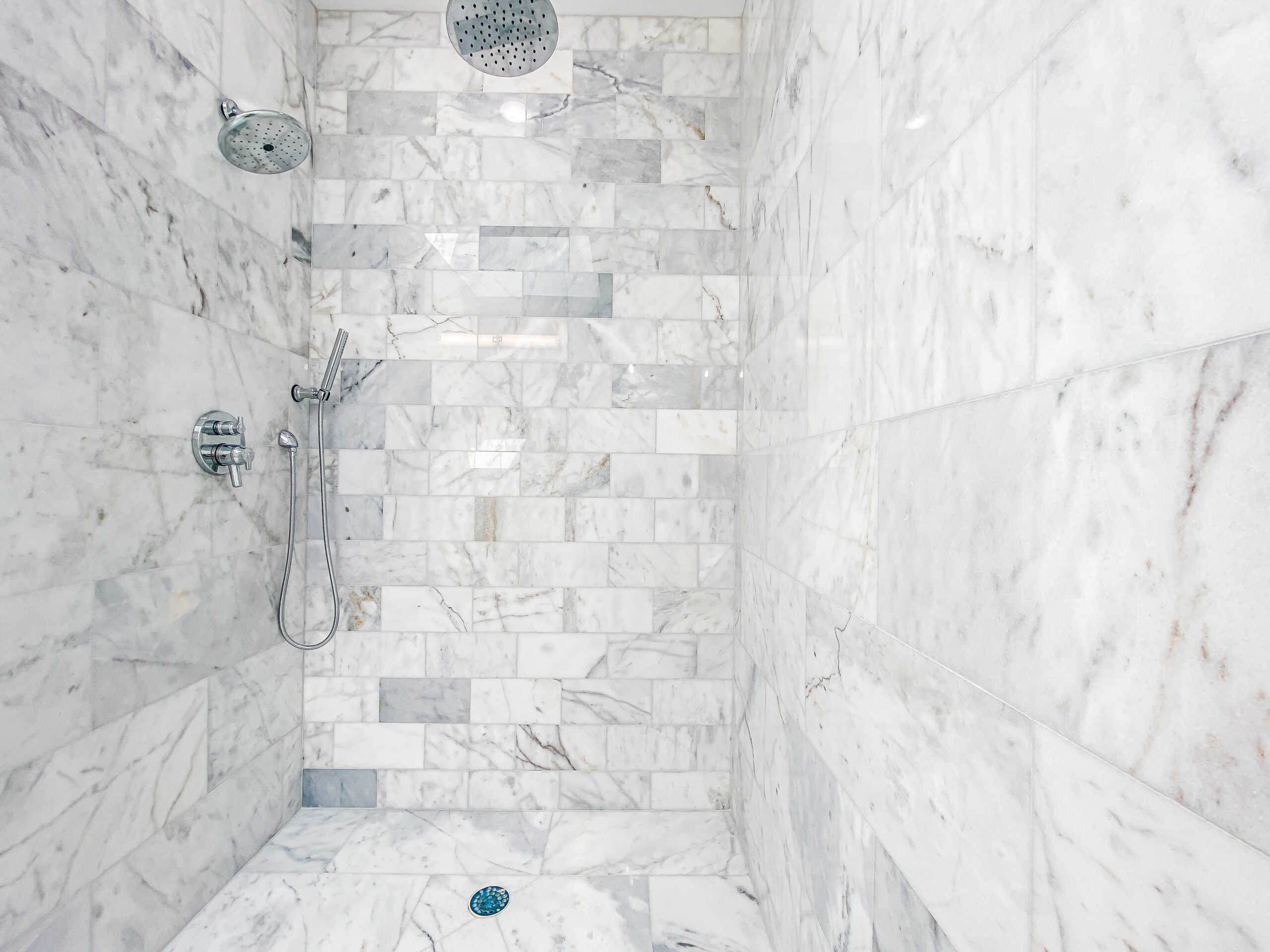
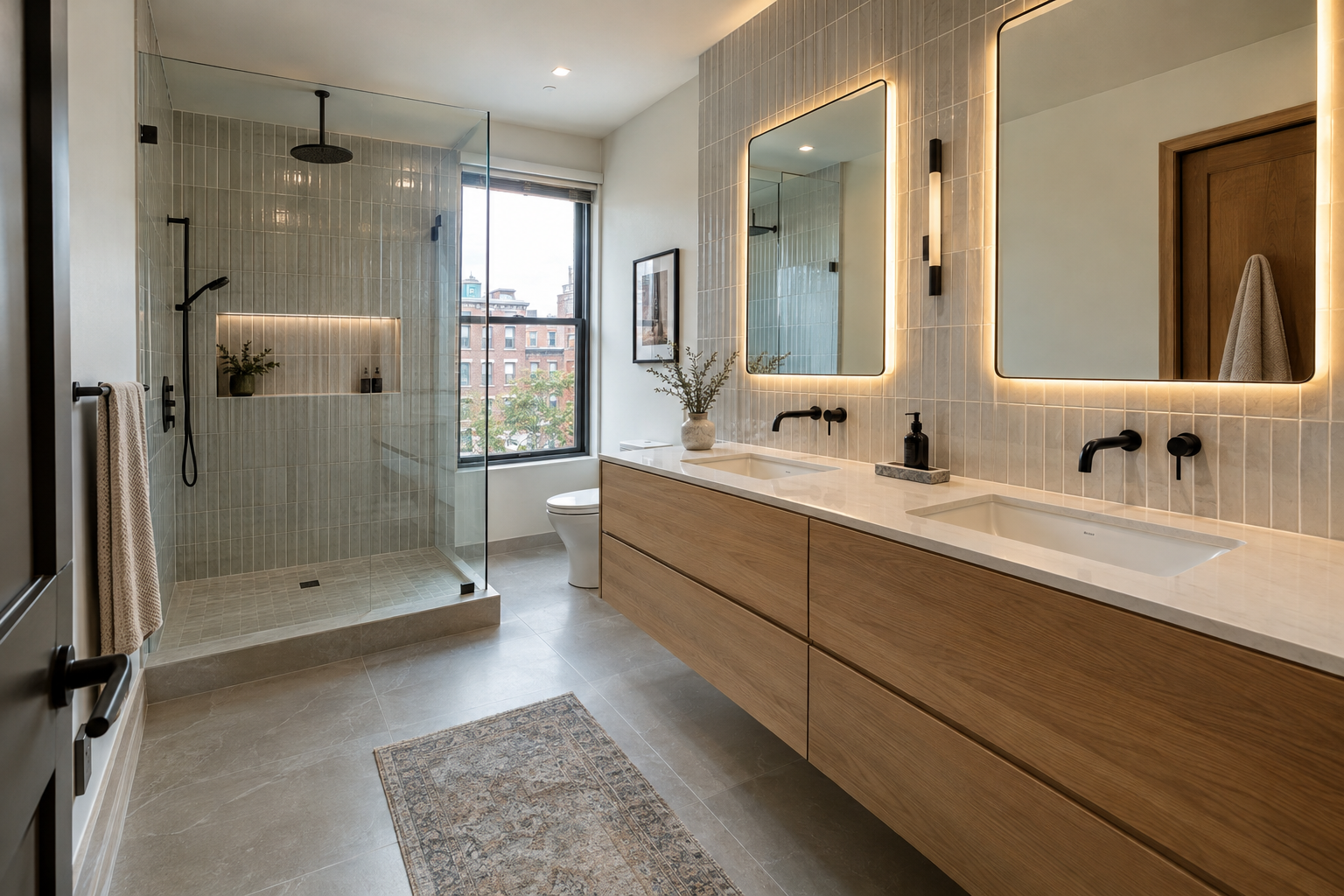
Large-format tile and walk-in showers are some of the most popular requests in Philadelphia bathroom remodels. A linear shower drain makes both possible. Instead of a small square drain in the center, a long, narrow channel collects water along one edge of the shower.
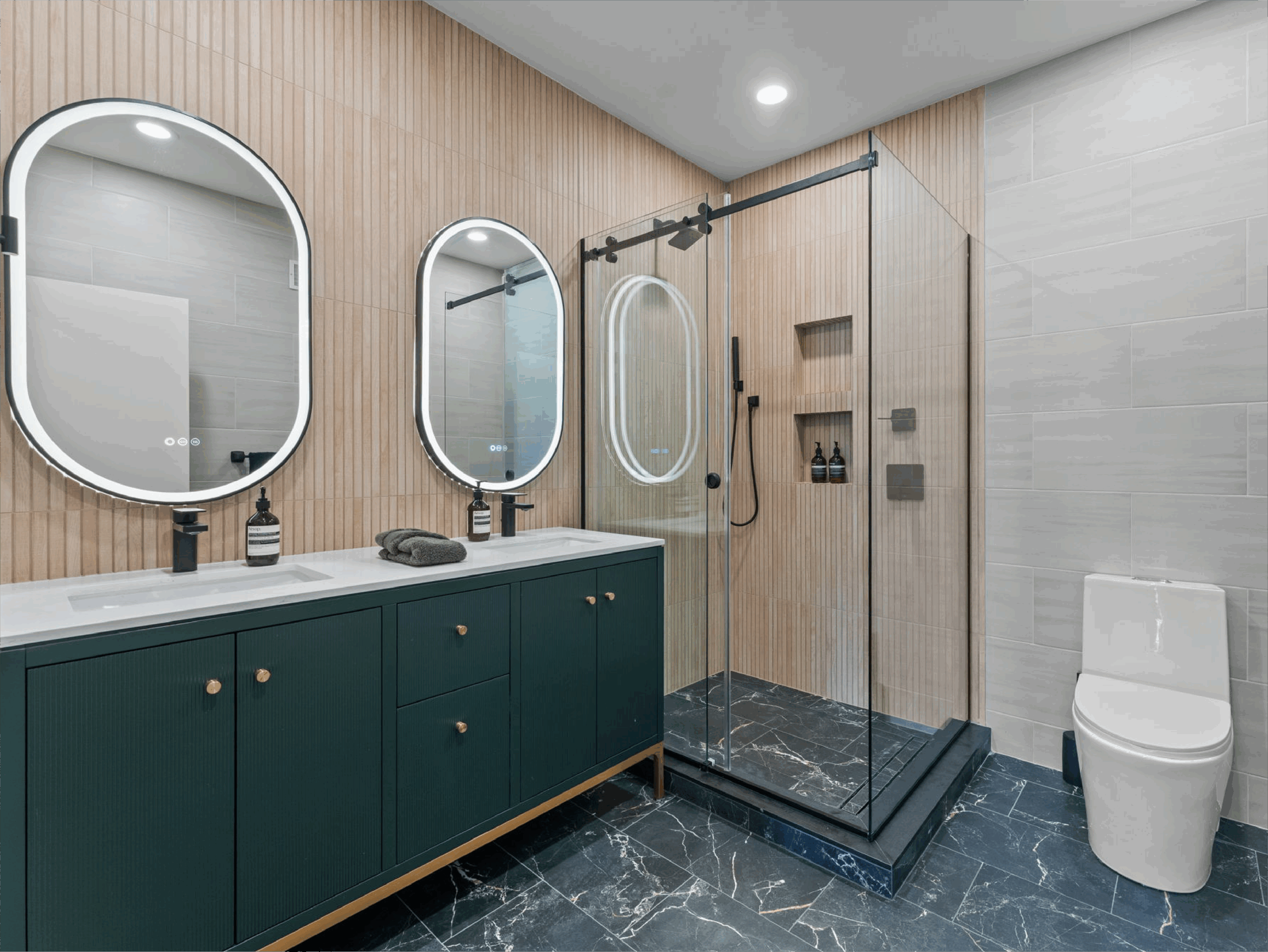
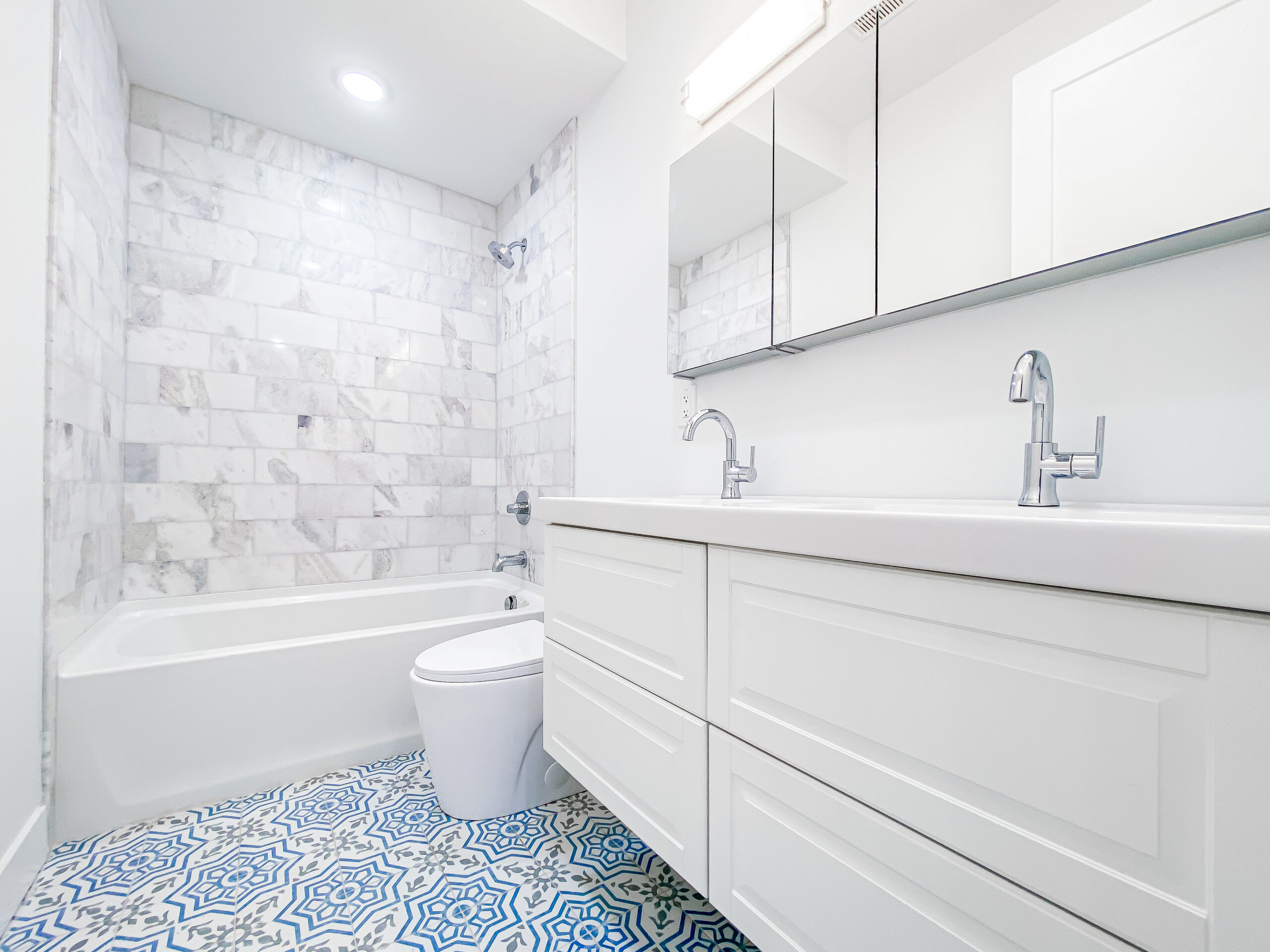
We recently remodeled a master bathroom in a Northern Liberties rowhome. The client wanted big porcelain tiles, a frameless glass enclosure and a clean modern look. A linear drain allowed the floor to slope in one direction, so the large tiles stayed flat and elegant.
This guide explains how a linear shower drain works, where to place it and what waterproofing details matter most.
Why a Linear Shower Drain Works With Large Tile
A center drain needs the floor to slope from four sides. That requires small tiles or many cuts. A linear drain changes the geometry.
- Single-direction slope. The floor tilts one way, toward the channel.
- Fewer cuts. Large-format porcelain tiles can run across the floor.
- Cleaner look. The drain sits along the wall or entry, not in the middle.
- Better for low thresholds. It supports low-curb and curbless designs.
Where to Place a Linear Shower Drain
Placement depends on the layout, the floor framing and the look you want. For example, a back-wall drain hides the channel, while an entry drain catches water before it reaches the bathroom floor.
- Against the back wall. The most discreet option, with tile running toward it.
- At the shower entry. Useful for curbless showers.
- Along a side wall. Works well in long, narrow rowhome showers.
In rowhomes, joist direction matters. The drain line must run between or across joists without weakening them.
Waterproofing Details That Protect the Floor Below
A linear shower drain is only as good as the waterproofing around it. Many Philadelphia rowhome bathrooms sit above a kitchen or living room, so leaks are costly.
- A bonded waterproof membrane across the full shower floor.
- Membrane carried up the walls and around niches.
- A drain flange that bonds directly to the membrane.
- A flood test before tile installation.
- Movement joints at wall-to-floor transitions.
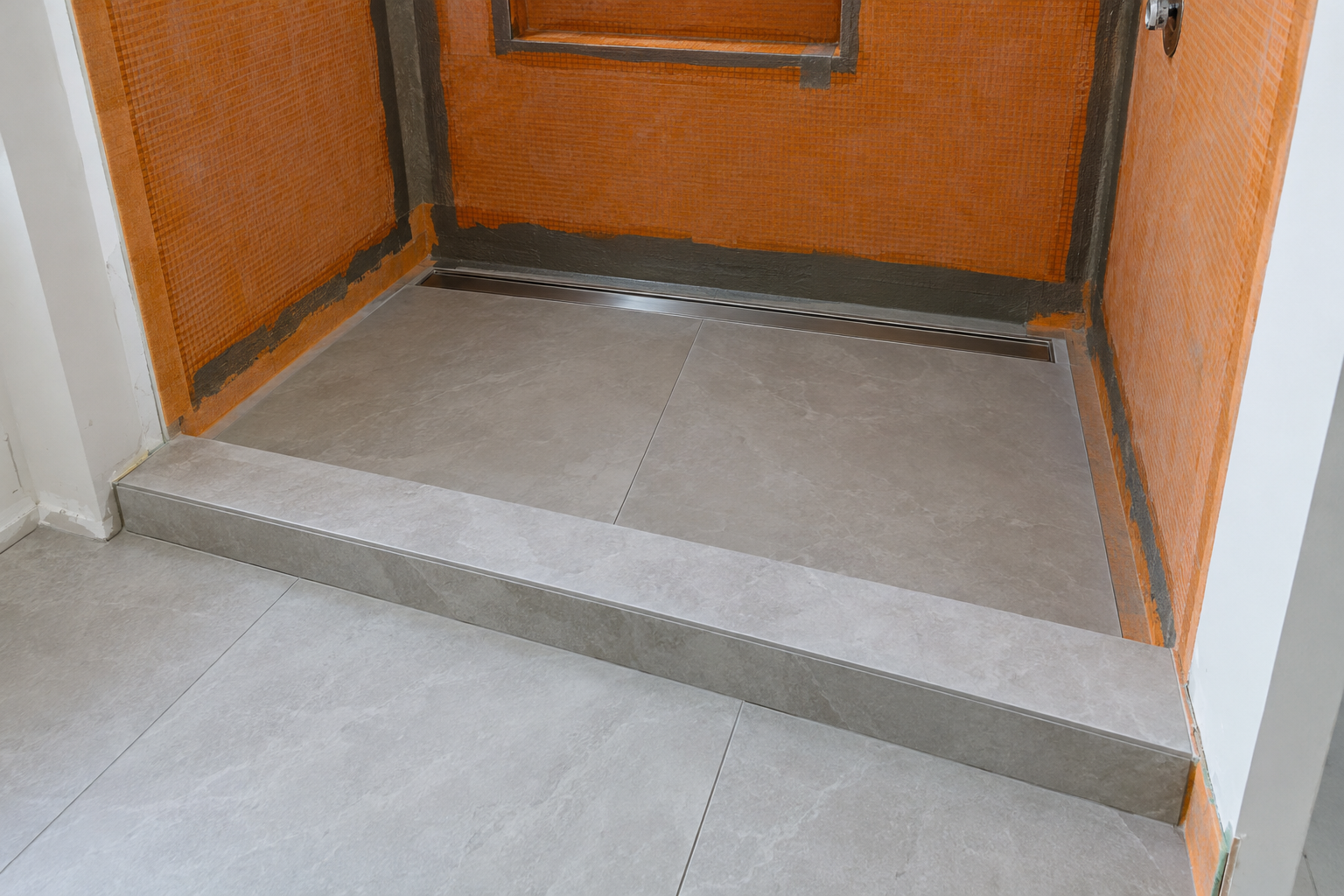
The Tile Council of North America (TCNA) publishes installation methods that many installers follow for shower waterproofing and tile.
Linear Drain vs. Center Drain: Making the Right Call
A linear shower drain makes sense when:
- You want large-format floor tile.
- You are planning a low-curb or curbless shower.
- You prefer a minimal, modern style.
A center drain makes sense when:
- You love small mosaic tile on the shower floor.
- The budget needs to stay tight.
- The existing drain location already works well.
Signs Your Current Shower Floor Is Failing
- Water pooling in corners after a shower.
- Cracked grout around the drain.
- Stains on the ceiling below the bathroom.
- A hollow sound when you tap the floor tile.
These signs usually mean the slope or waterproofing failed. As a result, a new shower pan is often needed.
Frequently Asked Questions
Is a linear shower drain harder to clean? No. Most grates lift out, and the channel can be rinsed quickly. Many homeowners find it easier than a center drain.
Can I add a linear drain in an older rowhome bathroom? Usually, yes. We check the floor framing and the drain path first.
Does a linear drain cost more? The drain itself costs more than a basic center drain. However, it may reduce tile labor when using large-format tile.
How long does a bathroom remodel take? Most full bathroom remodels take a few weeks, depending on layout changes and material lead times.
Plan Your Bathroom Remodel in Philadelphia
A linear shower drain can make a small rowhome bathroom feel open and modern. Philly Kitchen & Bath handles design, plumbing, waterproofing and tile for homeowners across the city. Explore our bathroom remodeling services, see our recent project portfolio, or contact our team to start your project.