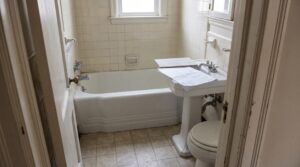
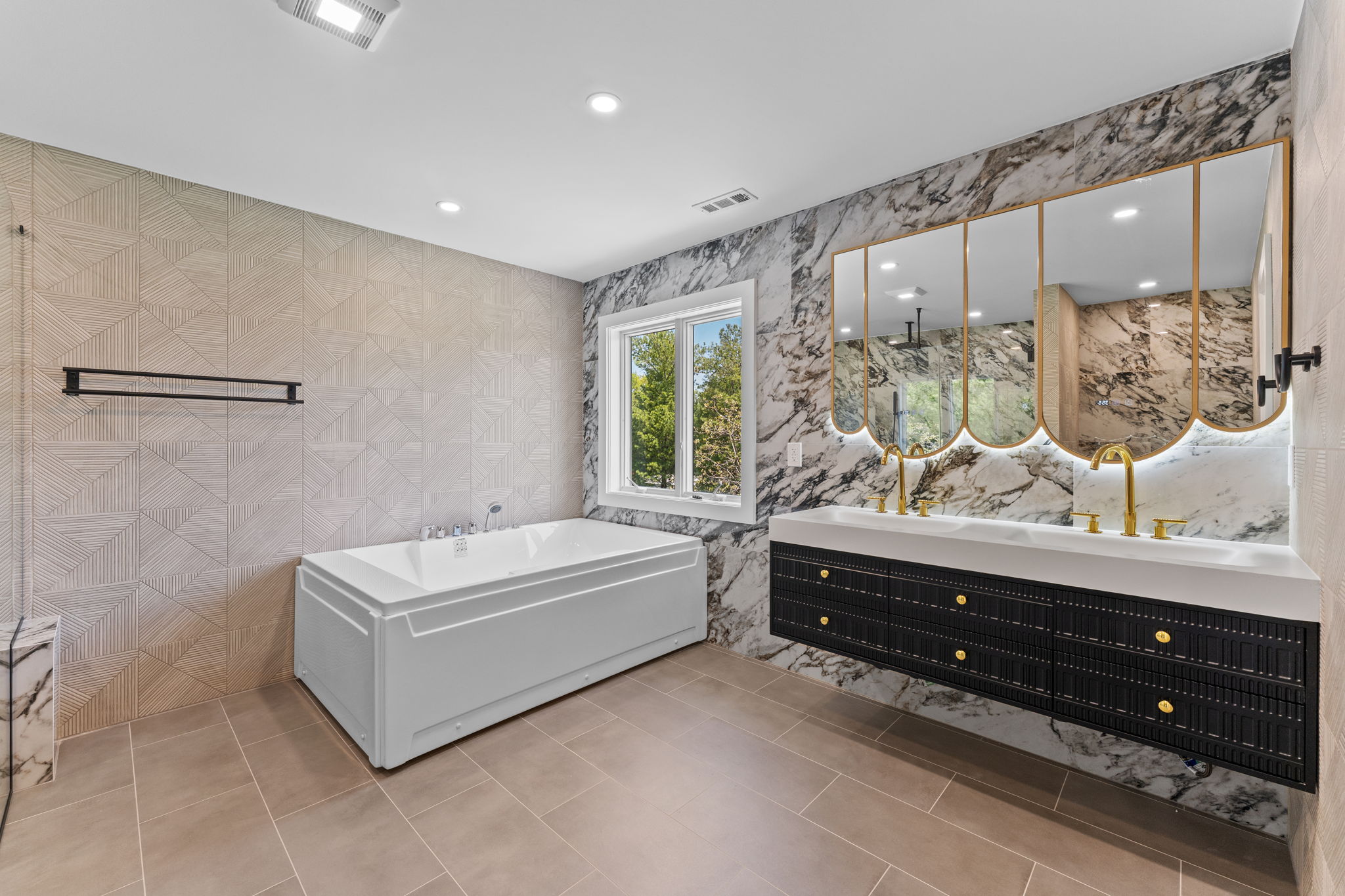
Bathrooms are high-moisture spaces where steam, water spray, and continuous drainage demand robust structural protection. Across Fairmount, Roxborough, Mount Airy, and Center City, older bathrooms often suffer from hidden moisture damage, failing grout lines, inadequate exhaust ventilation, and outdated plumbing fixtures.
Recognizing early indicators of subfloor deterioration and tile system failure helps property owners address minor issues before structural framing or lower-level ceilings sustain costly damage.
Early Warning Signs That Your Bathroom Requires Renovation
Moisture intrusion inside wall cavities or beneath subfloors often remains hidden until physical deterioration surfaces:
+—————————————————————–+
| BATHROOM MOISTURE FAILURE SIGNS |
| |
| * Cracked Grout/Caulk –> Water Intrusion Behind Tile |
| * Soft/Springy Subfloor –> Joist Decay & Subfloor Rot |
| * Blistering Ceiling Paint–> Inadequate Mechanical Venting |
+—————————————————————–+
1. Cracked, Missing, or Deteriorating Tile Grout
Grout is a cementitious product that can absorb moisture when unsealed. Cracked or missing grout lines allow water to seep behind wall tiles, saturating drywall or plaster substrates and causing tiles to loosen or detach from the wall.
2. Soft, Springy, or Sloping Subfloor Panels
A floor that flexes under foot pressure indicates that water has seeped past tile assembly joints, causing subfloor plywood or tongue-and-groove boards to rot.
3. Persistent Ceiling Stains on Lower Floors
Dark water rings or peeling paint on ceilings located directly beneath an upper bathroom point toward failing shower pan liners, leaking drain assemblies, or compromised tub overflow seals.
4. Blistering Paint and Mold Growth
Peeling paint, persistent surface mold along ceiling corners, or stubborn dark mildew show that current mechanical exhaust systems are failing to remove humid air effectively.
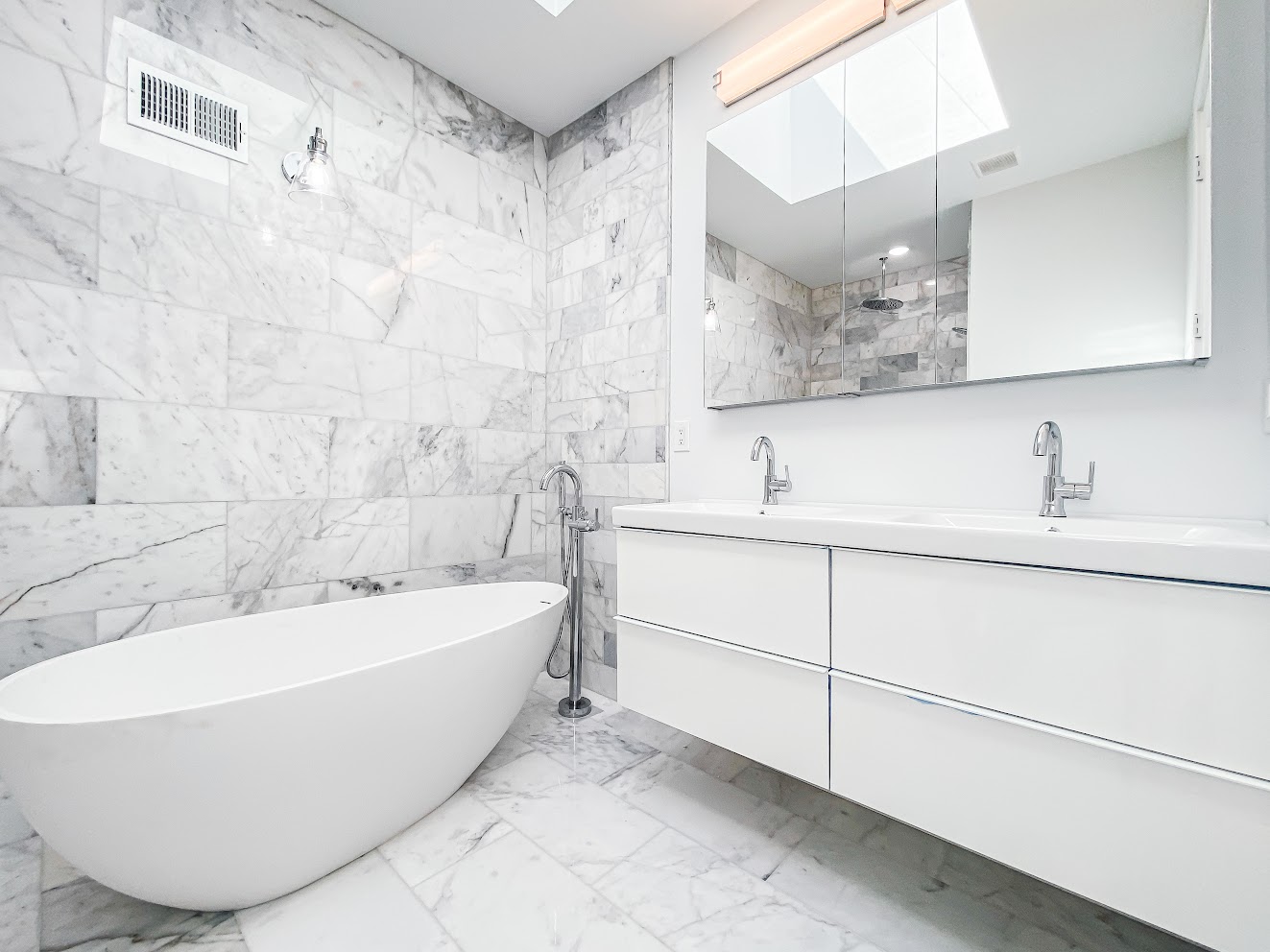
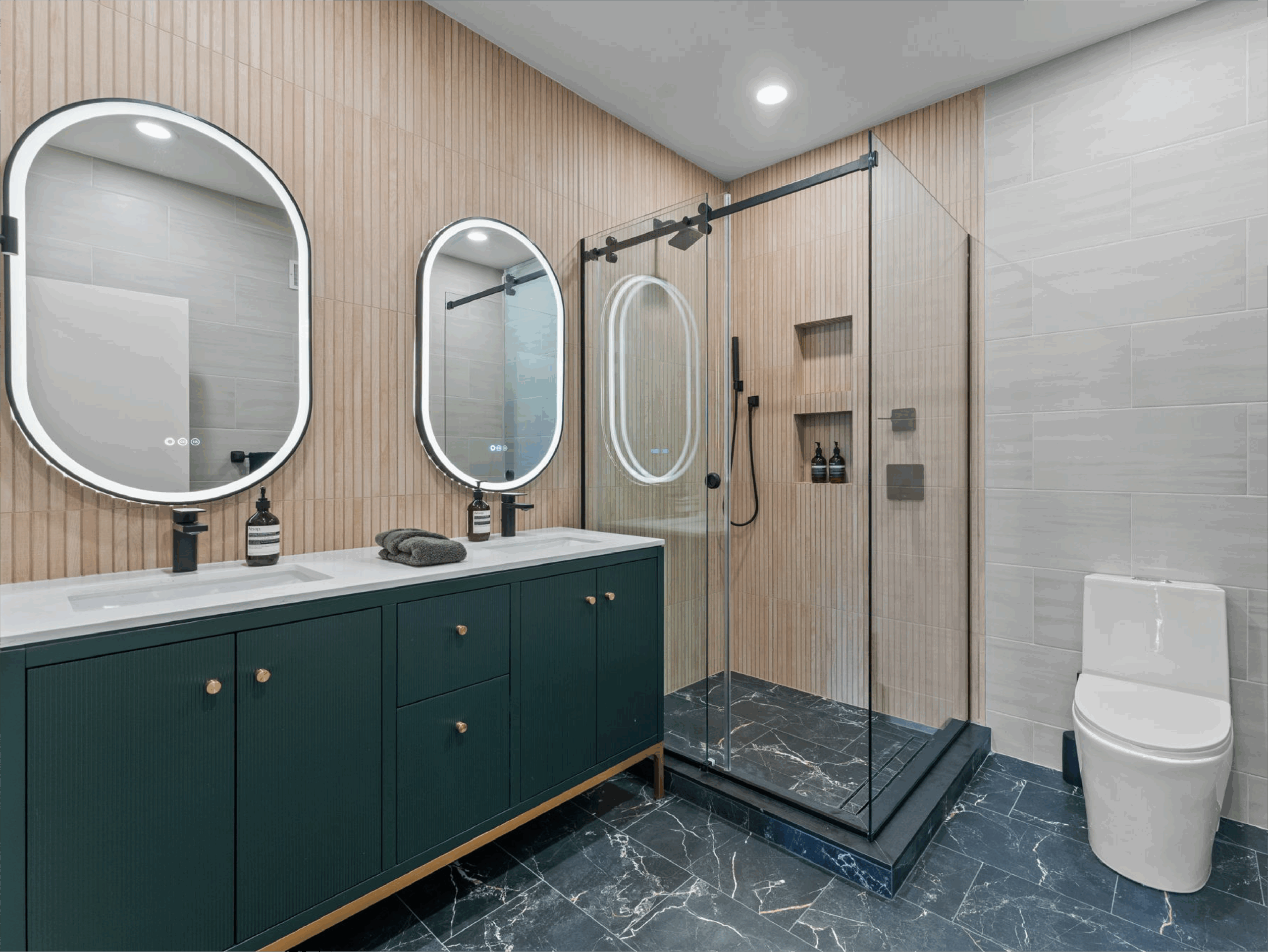
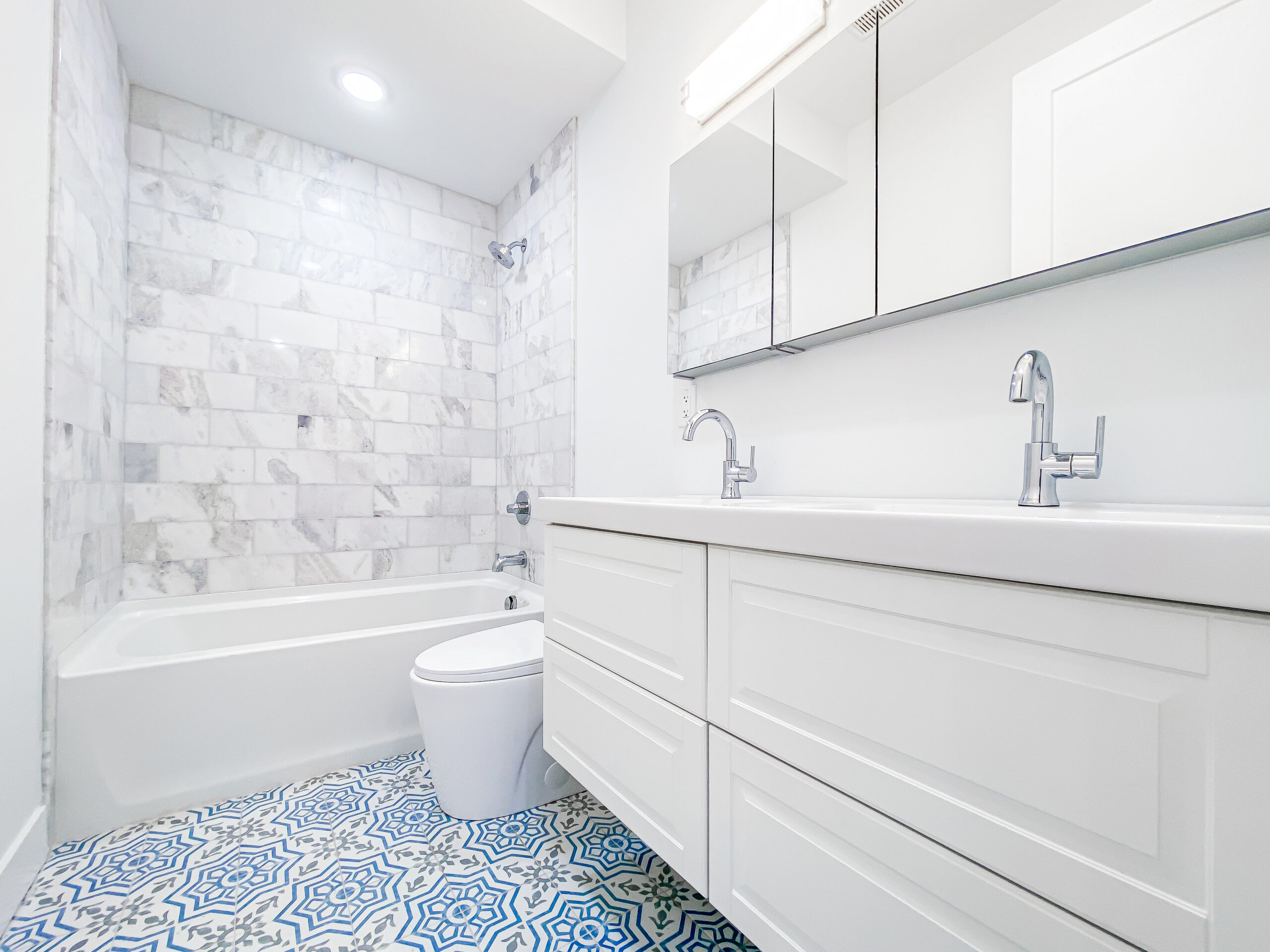
Addressing these issues with comprehensive bathroom remodeling solutions halts underlying timber decay and transforms worn spaces into modern, waterproof retreats.
Essential Waterproofing Standards for Modern Walk-In Showers
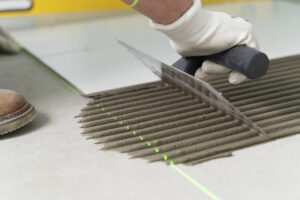
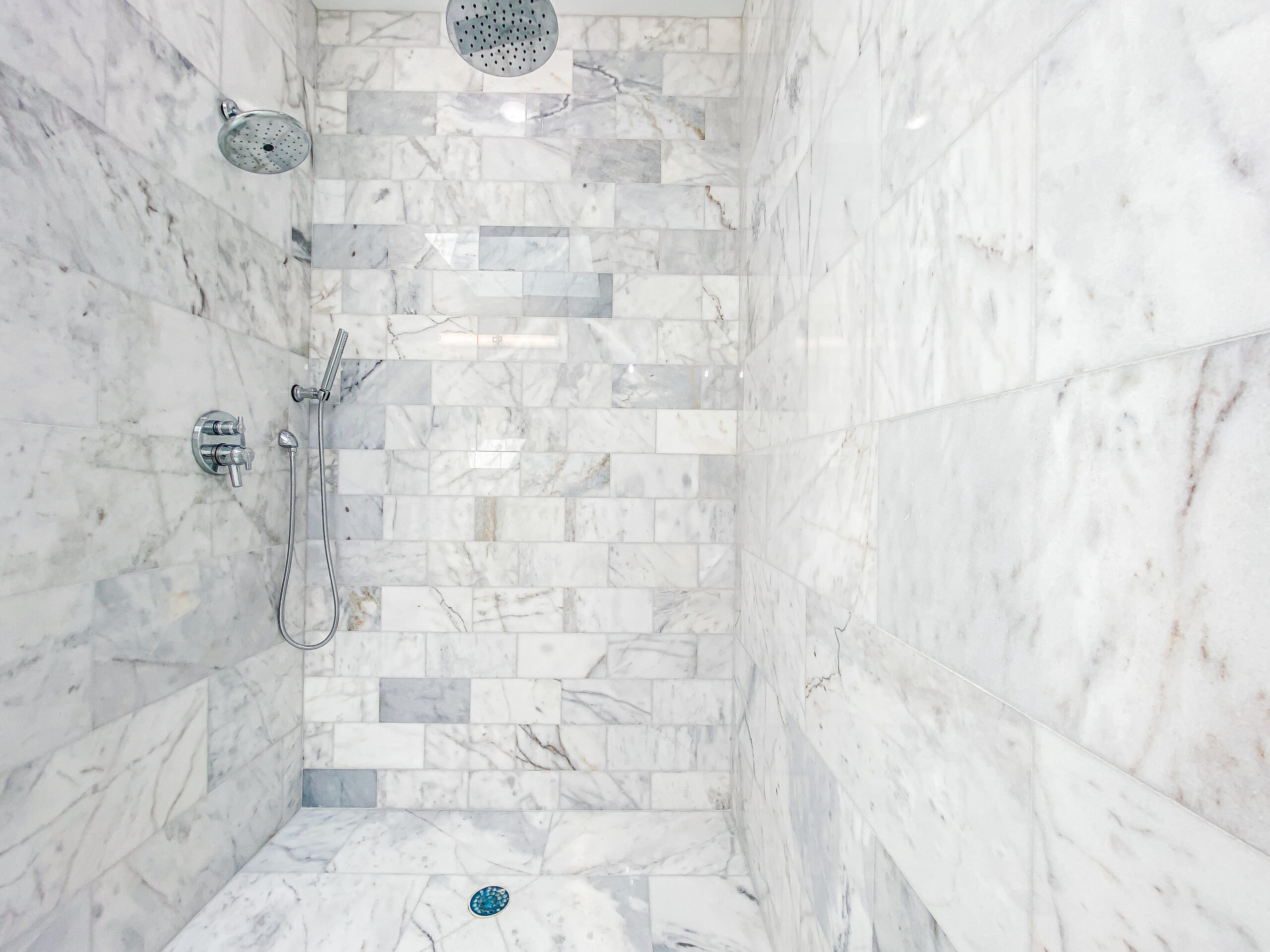
Modern tile installations require a continuous waterproof barrier beneath ceramic or natural stone tile finishes. Applying tile directly over standard greenboard drywall inevitably leads to failure because drywall absorbs water and degrades over time.
+—————————————————————–+
| CONTINUOUS WATERPROOFING LAYERS |
| |
| [ Finishes: Porcelain or Natural Stone Tile Set in Thinset ] |
| [ Waterproof Membrane: Liquid Shell or Sheet Membrane ] |
| [ Cementitious Backer Board or Waterproof Foam Board ] |
| [ Solid Wall Stud Framing & Level Subfloor Substrate ] |
+—————————————————————–+
Standards set by the Tile Council of North America: Handbook for Ceramic, Glass, and Stone Tile Installation → https://www.tcnatile.com require setting tiles over cement backer board or waterproof foam board systems protected by liquid-applied or sheet-waterproofing membranes.
Frequently Asked Questions
What is a curbless walk-in shower, and how is it waterproofed?
A curbless shower eliminates the traditional step-over threshold, creating a continuous floor transition from the main bathroom into the shower space. Waterproofing requires recessing the shower floor joists to build a continuous sloped mortar pan that channels water toward a linear or point drain.
Why is proper CFM exhaust fan sizing critical during a bathroom remodel?
Exhaust fan capacity is measured in Cubic Feet per Minute (CFM). Insufficient airflow allows humid steam to condense on cold walls, fueling mold growth and damaging wood trim. Modern standards recommend providing at least 1 CFM per square foot of bathroom area, venting exhaust air directly to the outside through insulated ductwork.
Can original cast-iron plumbing pipes be reused during a bathroom renovation?
While original cast-iron drain pipes can last for decades, they often accumulate internal rust scale that restricts water flow and leads to blockages. Replacing older cast iron with modern PVC drain stacks during wall demolition prevents future plumbing leaks behind new tile finishes.
What causes tile grout to crack over time?
Grout cracks primarily due to subfloor movement, unreinforced substrate flexing, or improper thinset mortar mix ratios. Installing an uncoupling membrane beneath floor tiles neutralizes horizontal subfloor expansion, preventing cracks from transferring into grout lines.
Plan Your Bathroom Transformation
Preventing hidden water leaks and improving indoor air quality protects structural wall framing across Fairmount, Roxborough, Mount Airy, and Center City homes. Designing a modern, waterproof bathroom delivers daily luxury and long-term durability. Contact Philly Kitchen & Bath LLC today to arrange a detailed bathroom remodeling consultation.