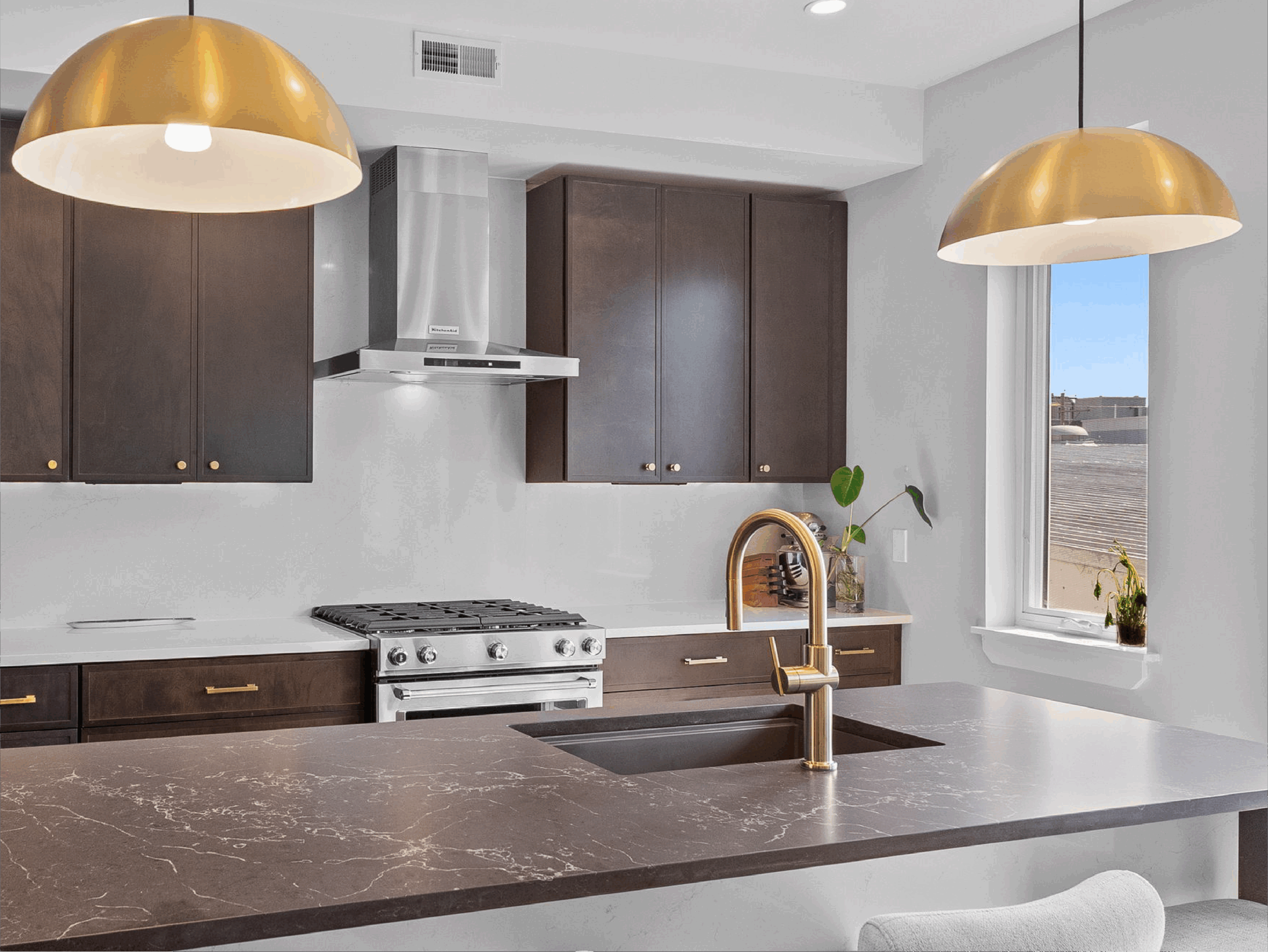
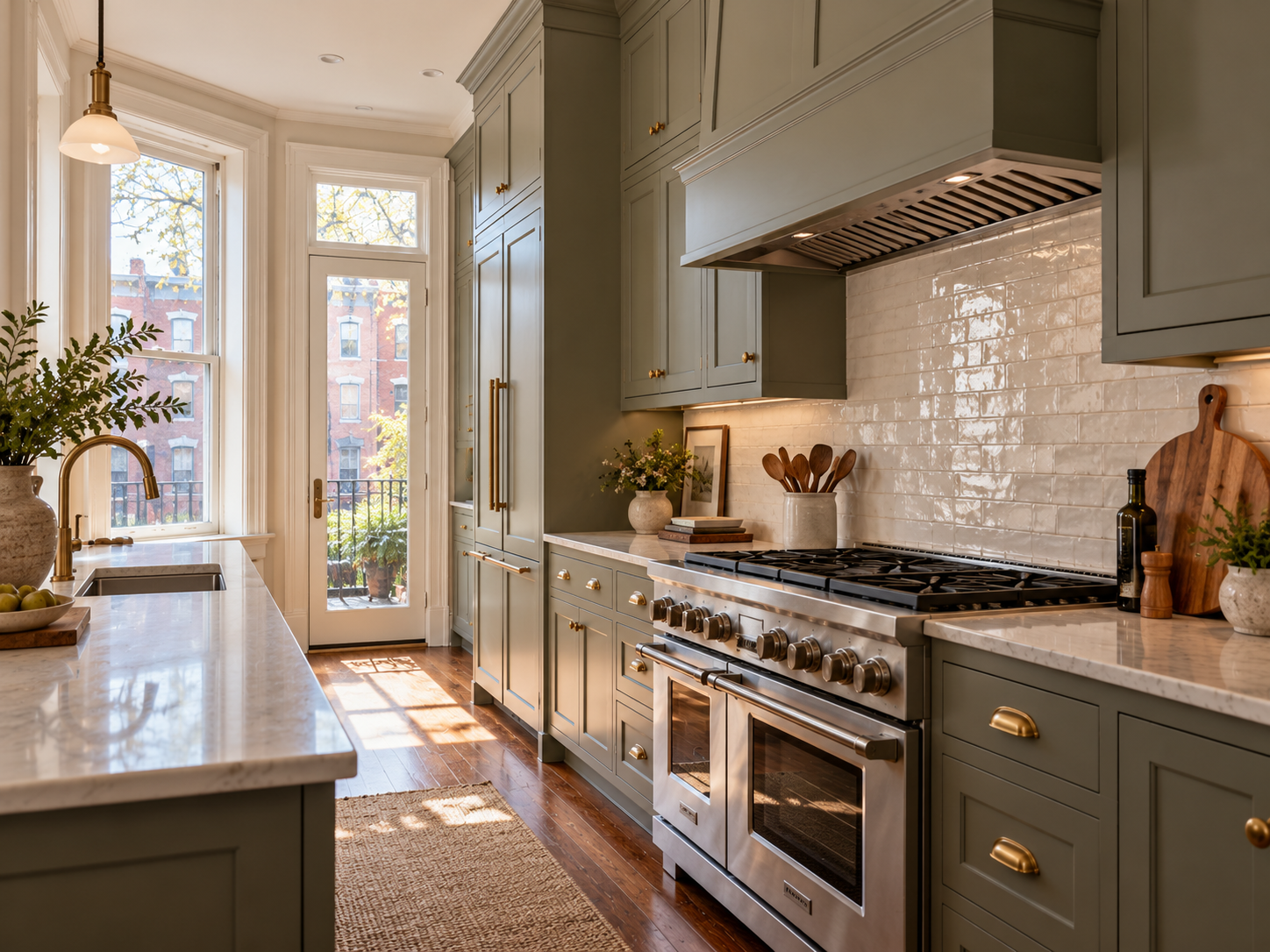
A range hood is one of the easiest kitchen components to select late—and one of the hardest to install properly after everything else has been built.
Homeowners may spend months choosing cabinetry, counter-tops, back-splash tile, and appliances before asking a critical question:
Where will the cooking exhaust actually go?
In a Philadelphia rowhome, the answer can be complicated by party walls, floor joists, upper bedrooms, existing duct-work, cabinetry, windows, and the narrow geometry of the building.
Range hood planning should therefore begin during layout design, not after the cabinets arrive.
Ducted and Recirculating Hoods Are Different Systems
A duct-ed hood captures cooking contaminants and exhausts air to the exterior through duct-work.
A recirculating hood pulls air through filters and returns it to the room.
They are not equivalent.
A recirculating system may be appropriate where exterior ducting is impractical and the appliance is designed for that configuration, but it does not remove air from the building.
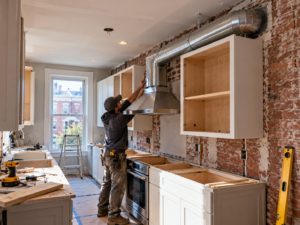
When exterior venting is planned, the duct route becomes part of the renovation design.
Philly Kitchen & Bath’s Philadelphia kitchen remodeling services can coordinate ventilation with cabinetry, appliances, framing, and finishes before installation begins.
The Shortest Duct Route Is Often the Best Starting Point
Long duct runs with multiple turns can reduce airflow and make the installation more complicated.
That does not mean every hood must sit directly against an exterior wall.
It means the route should be evaluated early.
In some row-homes, a rear kitchen wall provides a relatively direct exterior path.
In others, the range is positioned on an interior wall, requiring the duct to travel through a ceiling or soffit before reaching an appropriate exterior termination.
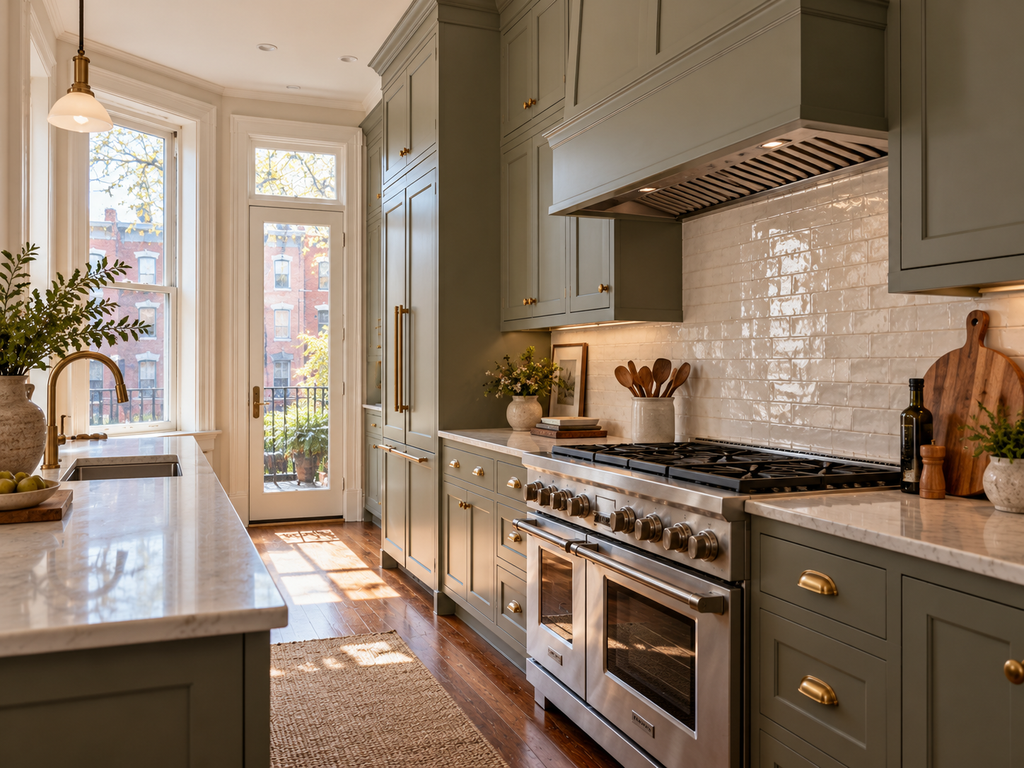
Party Walls Change the Options
Attached Philadelphia homes share walls with neighboring properties.
A range hood cannot simply be vented into a party-wall cavity.
The exhaust route needs an appropriate exterior termination and must be coordinated with building conditions and applicable requirements.
That makes the location of the range important.
A beautiful appliance elevation that ignores the exhaust path may require significant redesign later.
Cabinet Design Must Account for the Hood
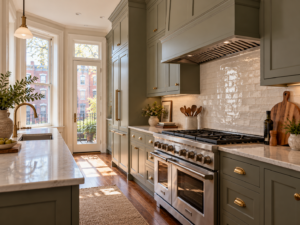
Wall-mounted chimney hoods, under-cabinet hoods, built-in inserts, decorative wood hoods, and microwave-hood combinations all require different cabinetry.
A custom hood insert may need a specific liner, enclosure dimensions, clearances, and duct connection.
The cabinet manufacturer or installer should have the exact appliance specifications before fabrication.
Duct Size Matters
The hood manufacturer normally specifies the required duct size and permitted configuration.
Reducing duct diameter simply to fit through a difficult framing space can increase resistance and reduce performance.
Similarly, flexible duct products may not be appropriate for every application.
The installation should follow the actual equipment requirements and applicable code.
Makeup Air May Become a Consideration
Higher-capacity exhaust systems can remove substantial volumes of indoor air.
Depending on equipment capacity, building conditions, and applicable code requirements, makeup-air provisions may become relevant.
This is especially important in tighter homes or buildings with naturally drafted combustion equipment.
Rather than selecting the largest hood available, homeowners should choose ventilation based on the cooking equipment and overall building conditions.
Coordinate Lighting and Electrical
Hoods often contain integral lighting and controls.
Some require dedicated electrical connections or specific outlet locations.
The electrical rough-in should be coordinated before drywall and back-splash work are complete.
The same applies to remote blowers or specialized ventilation equipment.
Exterior Termination Needs Attention Too
The wall or roof cap is part of the system.
The termination should be appropriate for the exterior surface, properly flashed or sealed, protected from weather entry, and positioned according to applicable requirements.
A poorly detailed exterior penetration can turn a kitchen improvement into a water-management problem.
Philadelphia homeowners planning substantial kitchen alterations can review current municipal requirements through the city’s building and repair permit resources.
Plan Ventilation Before the Kitchen Is Ordered
The ideal range hood is not simply the appliance with the highest airflow rating or most dramatic appearance.
It is the system that works with the cooking equipment, cabinet design, duct route, building envelope, and room layout.
When ventilation is planned early, those pieces can work together instead of competing for the same space.
FAQ
Is a recirculating hood the same as a vented hood?
No. A recirculating hood filters air and returns it to the kitchen, while a duct-ed hood exhausts air outdoors.
Can a hood vent through a Philadelphia party wall?
The exhaust must terminate appropriately outdoors; shared-wall conditions require careful planning.
Can the hood duct run through a cabinet?
Sometimes, depending on the hood, cabinet configuration, duct size, and required clearances.
When should I choose the range hood?
Before cabinetry and mechanical rough-ins are finalized.
Planning a Philadelphia kitchen remodel? Coordinate the range, hood, cabinets, duct route, and exterior termination before the kitchen design is locked.